
Your programme
Pathways to registration
There are two pathways to registration:
Direct Entry
Direct entry routes typically involve learners applying either directly to universities or via UCAS to study a programme validated by the HCPC.
These pre-registration programmes will differ in detail, length, and even academic level depending on the individual universities offering them. Each will be validated by the HCPC to enable students to register as a paramedic upon graduation.
Depending on where you study in the UK, there may be bursaries and other expenses available to you, alongside fee funding (student loans in England, Wales, and Northern Ireland, no tuition fees for home students in Scotland).
Apprenticeships
Apprenticeships are a model used in some areas of the UK whereby learners are employed by an organisation (usually an NHS Ambulance Service) and as part of their contract, are required to follow an education pathway to lead to registration as a paramedic.
Models may have their own distinctive features, but the essence of “earn whilst you learn” is a common thread. Apprenticeships are regulated separately and in addition to university requirements.
Allied Health Professional (AHP) Preceptorship Standards and Framework
The Allied Health Professional (AHP) Preceptorship Standards and Framework developed by NHS England as part of the ambition to ensure sustainable future staffing and improve patient care, the NHS England Long Term Workforce Plan identifies good quality preceptorship for the wider workforce as key to supporting recruitment, supporting staff to integrate into their places of work, and supporting staff retention.
In an effort to ensure the highest possible quality along with consistency NHSE along with a wide range of partners developed the AHP Preceptorship Standards and Framework, which should be used in conjunction with the Health and Care Professions Council (HCPC) Principles for Preceptorship, to provide best practice guidance on the application of these principles for AHPs.
Insight Article from December 2023 outlining the journey to publication of the AHP Principles of Practice Based Learning AHP principles of practice-based learning.
Kirsty Lowery-Richardson FCPara – Head of Education, Royal College of Paramedics.
The Royal College of Paramedics are one of ten professional bodies to collaborate on the production of the newly published AHP principles of practice-based learning. The principles were developed by Tamsin Baird (Education Advisor, Chartered Society of Physiotherapy) and Carolyn Hay (Head of Education, Royal College of Occupational Therapists) and first published in October 2022. Many AHP professional bodies quickly recognised the value and significance of framework for Practice based learning that these principles provide, ourselves included.
‘The document is designed to be used by everyone, UK wide, involved in practice-based learning: students and apprentices; university representatives; practice educators; service leads; business owners and many more. The same principles are applicable across all AHP professions. By having this common language and shared purpose, we believe these principles offer an opportunity to connect, understand different perspectives and identify areas for joined up working both within and across AHP professions truly delivering change as we are stronger together.’
Paramedic Principles
Paramedic principles, guided by the College of Paramedics (CoP) and the Health and Care Professions Council (HCPC) (HCPC), centre on ethical frameworks like Principlism (autonomy, beneficence, non-maleficence, justice), professionalism, patient-centred care (respecting dignity, consent), and evidence-based practice (EBP). Key principles include autonomous decision-making, continuous professional development (CPD), self-care, and values-based practice (VBP), ensuring care aligns with individual patient values.
Core Principles
- Autonomy: Upholding service users’ rights, dignity, values, and capacity to make informed decisions (valid consent).
- Beneficence: Acting in the best interest of the patient (doing good).
- Non-Maleficence: Avoiding harm (doing no harm).
- Justice: Fair allocation of resources and equitable care.
Professional Practice Principles
- Autonomy as a Professional: Exercising professional judgment, justifying decisions, and taking personal responsibility.
- Evidence-Based Practice (EBP): Using research, reasoning, and available information to make informed decisions, linking general evidence with individual patient values (Values-Based Practice).
- Continuous Professional Development (CPD): Regularly updating knowledge and skills, supported by the CoP’s CPD Hub and principles for effective workforce development.
- Scope of Practice: Understanding personal limits, identifying learning needs, and ensuring safe, effective, and lawful practice.
- Self-Care & Self-Awareness: Developing strategies for physical and mental well-being to maintain effectiveness and prevent burnout, with support from resources like The Wellbeing and Resilience Workbook for Ambulance Clinicians.
The College of Paramedics' Role
- Provides resources, standards (e.g., Scope of Practice), and CPD opportunities.
- Collaborates on frameworks, like those for AHP practice-based learning, influencing paramedic education and development.
- Promotes the application of ethical frameworks and core capabilities through publications and educational materials.
There are seven principles, summarised below with exerts from the document:
1
Principle 1: Practice-based learning opportunities are co-produced
The development of the future paramedic workforce can be represented as a three-legged stool. Each leg may be separate, but they are also all essential. If one of the legs is missing, the common goal simply cannot be achieved.
2
Principle 2: Practice-based learning takes place across all areas, pillars and levels of practice
UK health care is changing, as a result, where paramedics work and how we practice is changing too. The UK has an aging and growing population with more complexities than ever before.
Alongside this there is both policy drive and patient desire for person-centred care closer to home. Care that is underpinned by a robust evidence base, where equity is promoted and communities are empowered. Practice is responding to these changes.
We work across:
- different sectors of health and care including the independent sector, the NHS and voluntary organisations.
- different settings including people’s homes, GP practices, acute hospitals, charities, care homes, universities and many more. This list really could go on and on.
- the four pillars of practice – clinical, education, leadership and research – at all levels. The Royal College of Paramedics already recognise the importance by firmly embedding the pillars within our career framework. Practice-based learning should reflect this.
3
Principle 3: Practice-based learning environments must be inclusive and welcoming to all
Our learners should experience a welcoming and safe environment within all aspects of their studies. Practice, universities and learners all have responsibility and a role to play in achieving this. We should be actively anti-racist, anti-discriminatory and anti-oppressive in our practice. To do this we need to identify, challenge and remove any structural barriers to achieving equity of opportunities and experience for everyone. This will provide safe placements and work environments which are paramount to our health, well-being, safe learning and our feeling of belonging.
4
Principle 4: Practice-based learning uses flexible, appropriate and supportive models of supervision and delivery
To create quality, sustainable placements that better meet the needs of the setting, and the learners, we should think flexibly in terms of how learners are supervised and how placements are delivered.
5
Principle 5: Practice-based learning is designed with a whole team approach
Whatever the composition of the team, this approach enables learners to gain experiential knowledge, skills, behaviours and attitudes by being immersed in a practice environment to prepare for practice (53- 57). We need to support everyone in identifying and developing the skills they need to excel in their role, broadening the formal and informal training opportunities available.
6
Principle 6: All those involved in practice education feel valued, respected and recognised within their roles
The work of everyone involved in supporting quality practice-based learning experiences cannot be underestimated. Through the creation of positive learning experiences and cultures, they have the ability to support and shape a positive introduction to a learner’s chosen profession. Furthermore, without a breadth of quality placement opportunities being offered, there will be no future workforce. As such, it is vital that all those involved feel valued. Valuing, recognising and respecting the importance of all those involved in practice education is a shared responsibility, essential to the preregistration curriculum, to support our current learners, future workforce and to serve our communities.
7
Principle 7: Practice-based learning is evaluated; capturing data to drive improvement and demonstrate impact
Data tells us what we need to know about the value and impact that placements have. It tells us what is working well and where there may be frustrations or areas to improve upon. It can enable different approaches to be tested out and help support a case for change.
Practice based learning is an essential part of pre-registration paramedic education, with an ever increasingly packed curriculum and face to face teaching time being squeezed due to university regulations, the role of practice education is imperative in ensuring the competence of learners. The role of Practice Placements must be appropriately recognised and supported to ensure the success of this element of the learner’s journey.
The College collaborated with 9 of the other AHPs in late 2023 to refresh and publish the AHP principles of Practice Based Learning. The principles seek to guide a modern approach to learning in practice.
Practice-based learning (PrBL) prep
How to get the most out of PrBL opportunities
Each PrBL experience will have been chosen by your education provider to give you an opportunity to develop different areas of your practice on the journey to becoming a registered Paramedic. By discussing and understanding your university’s rationale for the PrBL you are allocated to, you will be able to enhance your experience by focusing on any specific learning objectives/opportunities afforded to you in that setting. Discuss this with your university/practice educator early on.
Ambulance
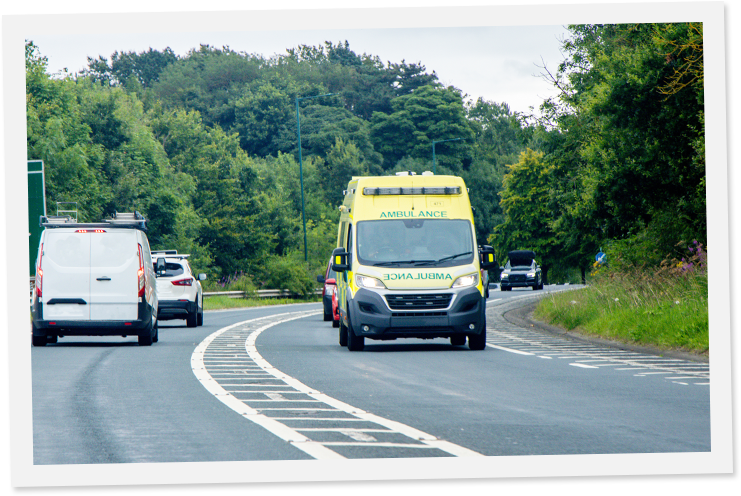
Traditionally, ambulance services have been the bedrock of PrBL experiences for student paramedics. Ambulance services offer a unique learning setting, and are unique within themselves.
Take opportunities afforded to you, such as working in urban, rural, or remote areas – you will be amazed at the different learning that you will gain from these different areas.
Cross Sector
Increasingly, PrBL is offered outside the ambulance sector; this is critical to developing a holistic paramedic who can operate in the modern healthcare arena. Sometimes, the benefits of specific cross-sector experiences may not be immediately apparent. Discuss this with your university and practice educators, and refer to the ‘Paramedic Curriculum’ to determine how it aligns with your education pathway.
Often, students return from cross-sector PrBL and identify that they have learnt significant lessons from attending. Sometimes, education providers that offer PrBL across the four pillars of practice (Education, Research, Leadership and Management, and Clinical Practice) may signpost you to novel PrBL opportunities in the ‘cross-sector’ space.
Electives - Student members
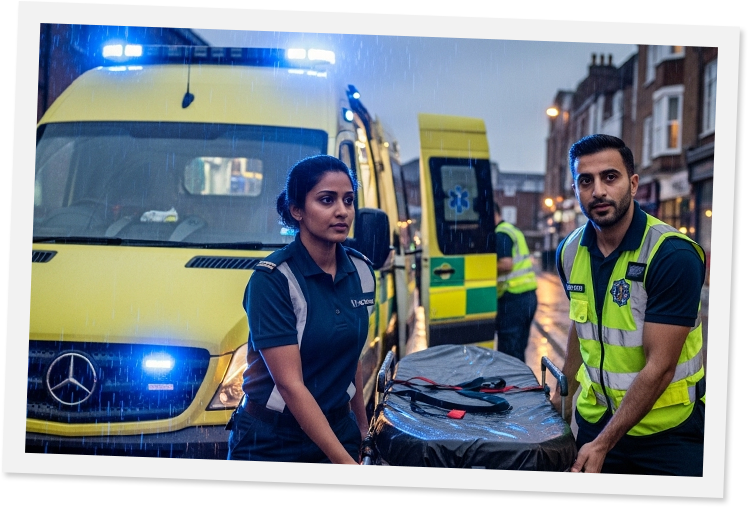
Some education providers offer elective PrBL opportunities, allowing learners to choose and arrange their own PrBL experience in an area of particular interest. This may be across any of the four pillars of practice (Education, Research, Leadership and Management, and Clinical Practice), in the UK, or abroad. Your education provider will be able to give you specific information relating to your programme.
How to register with HCPC
Following completion of an approved programme Paramedics need to register with the HCPC.
The HCPC provides guidance on the registration pathway. Review the application requirements and ensure you leave sufficient time to meet all of the requirements (medical, references etc).
The Royal College of Paramedics has it’s own Research Centre where you can find information about the work we do to represent our membership in research, as well as details about our research projects and the various resources that are available to help support you and the Paramedic profession in research related activities.
Access to current & previous research projects
We have a range of research projects that you can potentially get involved in.
Opportunities to promote your own research
You can share details of any research that you are personally involved in. Select the link to register details.